Dust costs solar owners energy. Clean panels on your schedule.
Lienry treats a panel as its own material, sets the pressure for solar glass, and cleans on the interval you choose, from rooftop arrays to solar farm rows.
Register interestDesigned for solar
- Rooftop arrays
- Solar farm rows
- Commercial roofs
- Rental rooftops
It knows a panel is a panel
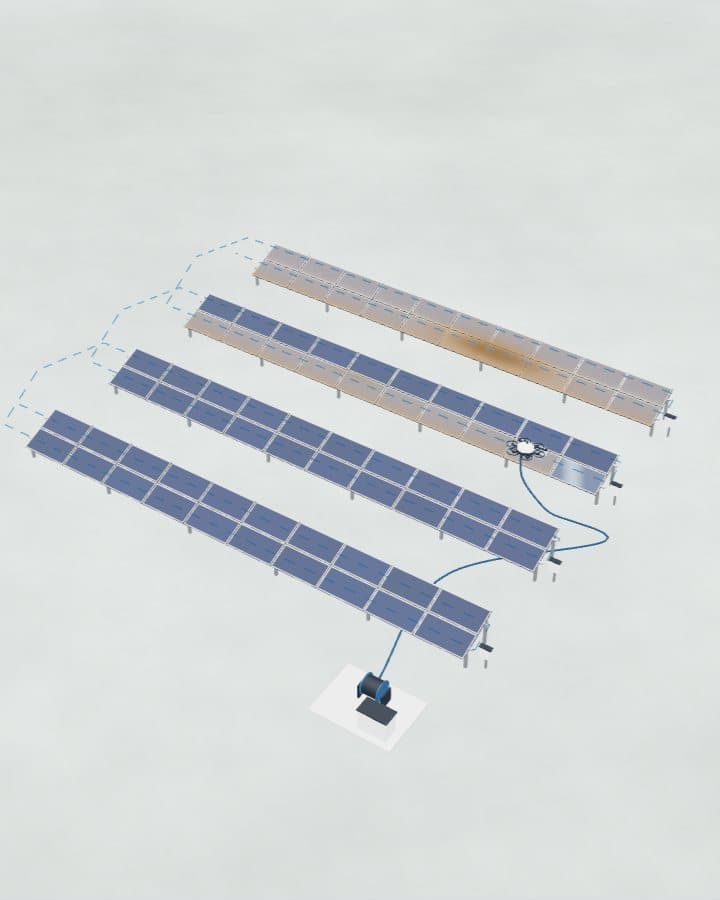
During a clean the drone identifies each material it is cleaning and adjusts its pressure to suit. Water comes through the tether, so the drone never carries it.
- Material identified during the clean
- Pressure set for solar glass
- Adjustable in the app

Every row planned, washed and tracked
The scan becomes a model of the array in the software. It sets the pressure for solar glass, plans two passes along each row and follows the wash live, with soiling shaded where it has built up. This is a demo array with demo data.
- A model of every row from the scan
- Pressure set for solar glass
- Live wash progress, row by row
- Soiling shaded where it has built up
Wash route
4 rows- Row ADone
- Row BDone
- Row C55%
- Row DQueued
This clean
64% of the route
51 of 80 panels washed
- Scan age
- 1 day
- Soiled rows found
- 4
- Next scheduled clean
- Sat 06:30
Array map
- Washed
- Pending
- Soiling
Model is illustrative. The software will render each property from its scan.
Inspect panel data
Rooftop arrays and solar farm rows, on your interval
From a home's roof to a row of ground-mounted panels, the clean runs with nobody on site.
Set how often the drone should check and clean, and change it in the app after a dusty week or a run of rain.
- Rooftops and ground-mounted rows
- Nobody on site during a clean
- How often it checks and cleans, changed whenever you like
- A record of each clean

What soiling costs
Three figures from peer-reviewed and international sources, each cited.

8–9%
energy reduction at most operational Australian solar farms studied, from dust between rain events
1Prasad, Nishant and Kay, Applied Energy vol. 310, 2022, doi:10.1016/j.apenergy.2022.118626. Source, opens in a new tab
4–7%
of global solar energy output lost to soiling, on average
2IEA PVPS Task 13/16 Fact Sheet, Understanding, Measuring, and Mitigating Soiling Losses in PV Power Systems, September 2025. Source, opens in a new tab
€3–5bn
a year in global revenue lost to soiling in 2018, even with optimised cleaning
3Ilse et al., Joule vol. 3 no. 10, 2019, doi:10.1016/j.joule.2019.08.019. Source, opens in a new tab
These figures describe the industry, not Lienry's results. Lienry Drones is pre-launch and has no customer results to report.
Frequently asked questions
Which surfaces does it clean?
Five kinds of exterior, each at the pressure set for it:
- Glass: facades, windows and roof glazing
- Solar panels: rooftop arrays and solar farm rows, at the pressure set for solar glass
- Walls: render and other wall finishes
- Roofing: metal roofing among them
- Driveways: on the home system, chosen in the app
The drone sets its pressure for each material before it washes.
What happens in bad weather?
Between cleans it shelters in a weatherproof capsule or waterproof pod. Its weather limits are still being finalised.
How much water does it use?
On the roof system the tether is fed from above. Water use per clean is still being finalised.
What permissions will it need?
We do not claim any approvals. Lienry is at concept stage, and what each site will need is still being finalised.